What’s the itinerary for today?

Outlining the itinerary of your tour is important. It helps your tour group to know what to expect and to get excited about the tour or the day ahead. To make your itinerary exciting it should be more than just a list of places to visit, it should leave the group looking forward to visiting them. In this article we’ll think about the English that we need to do this.

If this is the start of your tour, you will need to introduce yourself, thank the group for coming, and introduce the tour as a whole before you go through your itinerary with them. If you would like to know more about how to introduce yourself to your tour group in English then you can read my article on it, which is full of tips and useful English that you can use when you start your tour.

We’re going to look at an example of a tour leader giving an itinerary overview for a tour of Verona, a city that I had the pleasure of visiting many years ago when I was backpacking around Italy. In our example, we’ll see the type of English that we need to use to make our itineraries more interesting.

Read the itinerary for the tour of Verona. Which of the places would you find most interesting to visit?

Introduction

Good morning everyone! My name’s Nick, and I’ll be your tour leader for our exciting journey through the beautiful city of Verona at the start of our tour of Veneto. First of all, I want to thank you all for choosing us for this adventure. We have an incredible experience lined up, filled with fas________ sights, ri__ history, and won______ memories to be made.

Itinerary Overview

Today, we’ll start with a visit to the ic_____ Arena di Verona, one of the best-pr_______ ancient Roman amphitheatres. Here, you’ll have the chance to learn about its history and significance.

After that, we’ll head to Piazza delle Erbe, Verona’s oldest square, where you can admire the beautiful architecture and li____ market. You’ll have some free time to explore and perhaps grab a coffee or a gelato.

For lunch, we’ll be dining at Ristorante Tre Marchetti, where you can enjoy some del______ local cuisine. In the afternoon, we’ll visit la Casa di Giulietta (Juliet’s House) to see the famous balcony from Shakespeare’s Romeo and Juliet. Our final stop will be at the Castelvecchio Museum, a stu_____ medieval castle with an impr______ art collection.


Describing landmarks with adjectives

Using adjectives is a great way to get your group interested in your tour. What do you think the missing adjectives are in the introduction and itinerary overview?

Now listen to the itinerary overview and check your answers.

The answers
  1. fascinating sights
  2. rich history
  3. wonderful memories
  4. the iconic Arena di Verona
  5. one of the best-preserved ancient Roman Amphitheatres
  6. a lively market
  7. delicious local cuisine
  8. a stunning medieval castle
  9. an impressive art collection

These adjectives are useful because they are commonly used together with the types of nouns that you need to use to talk about your itinerary, but other adjectives are also possible. Maybe you can think of some of them.

How to use them

If you would like to start using these adjectives, you need to know more than their basic meaning. It’s also important to understand what they are often used to describe, so here’s a useful table to help you to understand how you can use these adjectives to give an overview of your itinerary. The blue links will take you to an online dictionary where you can listen to the pronunciation of these adjectives.

AdjectivePronunciationMeaningNouns that it is commonly used with
Fascinating/fæsɪneɪtɪŋ/
Note: the ‘c’ is silent
Very interestingsights
insight into s.th
look at s.th
history
story
Rich/rɪtʃ/
Note: the ‘i’ is a short sound as in ‘big’
Interesting because it is full of different events.history
culture
tradition
Wonderful/wʌndəʳfʊl/Very goodmemories
experience
place to eat/visit
views
Iconic/aɪkɒnɪk/
Note: the first ‘i’ is an /aɪ/ sound like eye, my or like.
Very important or impressive as a symbol of something amphitheatre
landmark
building
historical figure
painting
image
statue
Best/Well-preserved/wel-prezɜ:vd/Kept in good condition over a long period of timeamphitheatre
fossils
ancient remains
fresco
castle
monument
Lively/laɪvli/
Note: the ‘i’ is an /aɪ/ sound like eye, my or like.
This is different from the pronunciation of the ‘i’ in the verb ‘live’ /lɪv/
a place or event where a lot of interesting and exciting things happenmarket
atmosphere
bar
nightlife
part of town
Delicious/dɪlɪʃəs/
Note: the ‘e’ is an /ɪ/ sound like the ‘i’ in big.
Used to describe food that is very tasty.cuisine
breakfast
lunch
dinner
dessert
dish
meal
snack
Stunning/stʌnɪŋ/Absolutely beautiful or very impressivecastle
architecture
views
setting
palace
scenery
artwork
Impressive/ɪmpresɪv/Something that impresses you because of the skill required to do it or because of how big it is.
Note: Impressive is only used in a positive sense.
art collection
architecture
skill
achievement
range of…

Try it!

Think of the tours that you have been involved in. Can you think of an example of

  1. A landmark with a fascinating history behind it?
  2. A region that has maintained a rich culture of local cuisine?
  3. A tour group that went home with some wonderful memories?
  4. An iconic landmark?
  5. A well-preserved structure that dates back to ancient times?
  6. A part of town with a lively atmosphere?
  7. A restaurant that serves some absolutely delicious dishes?
  8. A vantage point with stunning panoramic views?
  9. A museum with a truly impressive collection of art?

Let’s have a chat about it. I’d love to hear about your examples. You can email me at nji.swerdlow@gmail.com, or click on the link below to book a time to have a chat.

Adding colour to your itinerary

Let’s see how we can use these adjectives to make our itinerary sound more interesting and exciting. Take a look at how the Piazza delle Erbe (pictured above) is described in the itinerary for our tour of Verona.

After that, we’ll head to Piazza delle Erbe, Verona’s oldest square, where you can admire the beautiful architecture and lively market. You’ll have some free time to explore and perhaps grab a coffee or a gelato.

The tour leader tells the group four things about the place that they are going to visit.

  1. What its name is
  2. What it is
  3. What you can see there
  4. What you can do there

The first three of these pieces of information neatly fit into one sentence. The tour leader adds detail about the Piazza delle Erbe in two ways. Firstly, he uses commas (,) to briefly explain what the Piazza delle Erbe is. Secondly, he tells the group what they can see using a relative clause starting with where to talk about a place where something happens. We can use which to explain what a landmark is. Let’s have a look at an example about the Arena di Verona.

Today, we’ll start with a visit to the iconic Arena di Verona, which is one of the best-preserved ancient Roman amphitheatres.

Don’t forget to pause!

As you can see, there are also commas before the relative pronouns (where and which) because we are adding extra information about each landmark, which helps you to know when to pause and take a breath when you are speaking.

Try it!

Try reading the description of the Piazza delle Erbe out loud twice. Firstly, read it all the way through without pausing. Now, read it again and pause where you see commas or full stops (.).

Notice how much easier it is to speak fluently if you have natural pauses in your speech. It’s also easier for your tour group to follow what you are saying when they listen to you. By the way, this is true in your language too!


In this article we’ve looked at

  1. Adjectives that are useful for describing places on your itinerary.
  2. A structure that helps you to make your itinerary more interesting
  3. How to add detail to your description of landmarks
  4. The importance of natural pauses when we are speaking

Try it!

Using what you have learnt in this article, introduce a landmark on your tour itinerary using the structure that we saw earlier. Try using these ideas to make your itinerary more interesting and exciting next time you give an overview of it to a tour group.


Let me know how you introduce the places on your tour itinerary. I’d love to hear from you. You can email me at nji.swerdlow@gmail.com or book a time to have a chat with me using the link below.

I hope you’ve found this article useful. If you have, please like it, subscribe for more articles like it, and if you think it would help a friend or colleague, then share it with them. I’d really appreciate it!


What else can I do to help you?

If you’d like to make your English tour more engaging, then let me tell you about Improve your English tour as you work, an English course especially for busy tour guides.

Why Improve your English as you work?

Many tour guides that I’ve met find it difficult to get their tour groups engaged and interested on their guided tours in English. As a teacher, I understand the importance of knowing that your group have had an interesting experience and have learnt something new.

Improve your English tour as you work is an English course that helps you to give interesting tours in English that your tour groups feel involved in.

Busy?

I know you’re busy, so Improve your English tour as you work fits into your working week by combining supported learning in your own time with 1-to-1 sessions with me to prepare your English tours and learn from them afterwards. 

Where can I find out more?

You can find out more on my website or book a time to have a chat with me. It would be great to speak with you.

Start learning for free!

The best way to know if a course is right for you is to try it, so here is a free lesson from Improve your English tour as you work so that you can see for yourself.


dav

Tour introductions 1: how to introduce yourself to your group in English

Hi, my name’s Nick. I’m an English teacher, so I’ve learnt something about standing up in front of a group of people and introducing yourself.

How you introduce yourself at the start of your walking tour is important because it’s your chance to make the group feel comfortable around you, and excited about the tour. How do you normally introduce yourself to your tour group? What sort of information do you usually include?

At the end of a good introduction the people in your tour group should

  • know your name and have a positive impression of you as a tour guide
  • feel comfortable to approach you and ask you a question
  • have a general idea of what the tour will be of
  • understand something about the context of what they are going to see
  • know basic information about the tour like how long it is and how many landmarks they will see
  • be excited about the tour and interested to learn more about the content of the tour

So, in the first of two articles on introductions we’re going to look at the English that we need to introduce ourselves on a walking tour.

Greeting everyone and introducing yourself

The most important thing at this point is to get people’s attention before you start speaking. How do you usually do this? You might like to stand where everyone can see you and put your hand up until the whole group is silent, or ask people to clap twice if they can hear you. When everyone claps then you have their attention. Once you have people’s attention introduce yourself clearly, confidently and in a polite and friendly manner.

When you introduce yourself, you should also think about how formal or informal you want to be. Usually, when you speak in front of a group, it’s better not to be too formal so that they feel comfortable around you. For example, most people use contractions like ‘My name‘s (Nick)’ when they speak naturally.

InformalHi…(guys)
my name’s…
I’m…
NeutralHello…
Good morning..
Good afternoon..
Good evening…
(everyone)
(Let me introduce myself)
my name is…
Formal(ladies and gentlemen)(Allow me to introduce myself)

Try it!

Practise introducing yourself in the mirror so that you are more confident and fluent when you start speaking in front of a group.

Tell them something about yourself

Why is it important for the group to know something about you? After all, they are here for the tour, not for your life-story.

Well, ask yourself this: Why did they decide to join your tour in the first place instead of finding out about the landmarks online or in a guide book? I think it’s because you bring the tour to life through your knowledge, enthusiasm, and personality. So, at the start of your tour you need to make a connection with them to show them that they are going on an interesting, and educational tour led by a personable, enthusiastic, and knowledgeable person.

So, what type of thing should we say about ourselves? Try to link what you say about yourself to the location of the tour. You might like to say something brief about one of these topics:

TopicExample
Where you are fromI’m from…(Oxford)
What your connection is to the location of the tourI grew up here.
Years ago, I studied here, and I come back every year.
How you know about the tour locationI’ve lived in (Oxford) for most of my life so I know it like the back of my hand
Why you are enthusiastic about the locationI travel around a lot, but (Oxford) is one of my favourite cities. It’s absolutely full of beautiful university buildings with cultural connections to books like Alice in Wonderland and films like Harry Potter. I can’t wait to show you around!

Useful Phrases

I know it like the back of my hand

Meaning: This is a way to say that you know a place or a route very well.

Example: I’ve led tours around this museum for years. I know these rooms like the back of my hand.

You can also say:I know it inside out.

Be full of + noun

Meaning: there is a lot of something in one place.

Example

  • Oxford is full of beautiful university buildings
  • The Palatine Hill in Rome is absolutely full of ancient ruins from the Roman Empire

You can also say: there + is + noun + around every corner

Example: There’s something interesting to see around every corner.

Can’t wait + to infinitive

Meaning: This phrase is used to show that we are very excited about something that we are going to do in the future

Example: I can’t wait to

  • show you around the city
  • tell you about it
  • see you
  • meet you

You can also say: I‘m looking forward to showing you around the city.

Look forward to can be followed by

  • verb+ing (seeing you)
  • a noun or pronoun (the tour)

To make look forward to stronger we can use adverbs like ‘really’

Example: I’m really looking forward to the tour.

Show you around

Meaning: to go with someone to show them the interesting features of a place

Example:

I’m showing a group around the museum later.

It’s a beautiful city. Let me show you around.

How to use it:

Show + someone/some people + around + place

As you can see in the examples above, show someone around is a separable phrasal verb, which means that show and around are separated by the person or people that you show around. Around is usually followed by the place that you show someone around, but this can be implied.

Try it!

Try answering these questions to practise the useful language?

  • What positive or negative things is your city full of?
  • What are you looking forward to doing next weekend?
  • Where is your favourite place to show people around? Why?

What do you say about yourself when you introduce yourself to tour groups? What are tour groups interested to know about you? How can you link what you say about yourself to talking about the location of the tour?

Find out a bit about them

Walking tours are most engaging when they are interactive, and telling the group something about yourself gives you a great opportunity to find out something brief about them. What types of questions could you ask? Here are a few examples:

  • Where are you all from?
  • Which countries are you from?
  • Have you travelled a long way to get to (Madrid)?
  • Is this your first time in…(Rome/Italy)?
  • Who’s been here before?

(Here who’s is a short form of who hasWho has been…?. Who’s can also mean who is. For example, who’s joining the tour tomorrow?)

How to use it: You

Unlike in Latin languages, ‘you’ can be used to talk to one person or a group of people. To indicate that we are talking to a group of people, we sometimes say ‘you all’ or ‘you guys’. We don’t use ‘you guys’ in the singular. Anyone or Anybody is used to ask questions to a group of people or to make negative sentences. Here are some examples:

  • It’s great to meet you all.
  • Does anyone know what this place is famous for?
  • I’m looking forward to showing you guys around Madrid.

Don’t forget that the question that you ask them should follow neatly on from what you say about yourself. For example:

I’m from Oxford in England. Where are you guys from?

Try it!

Prepare a question to find out something about the people on your next tour group that follows on from introducing yourself.


Let me know how you introduce yourself to tour groups. I’d love to hear from you. I hope you’ve found this blog post useful. If you have, please like it, subscribe for more blog posts like this, and if you think it would help a friend or colleague, then share it with them. I’d really appreciate it.

What else can I do to help you?

If you’d like to make your English tour more engaging, then let me tell you about Guide better tours in English, an English course especially for busy tour guides.

How I can help you

Many tour guides that I’ve met find it difficult to get their tour groups engaged and interested on their guided tours in English. As a teacher, I understand the importance of knowing that your group have had an interesting experience and have learnt something new.

Guide better tours in English is an English course that helps you to give interesting tours in English that your tour groups feel involved in.

Busy?

I know you’re busy, so Guide better tours in English fits into your working week by combining supported learning in your own time with 1-to-1 sessions with me to prepare your English tours and learn from them afterwards. 

Where can I find out more?

You can find out more on my website, send me a message at nji.swerdlow@gmail.com, or book a time to have a chat with me. It would be great to speak with you.

Start learning for free!

The best way to know if a course is right for you is to try it, so here is a free lesson from Guide better tours in English so that you can see for yourself.

English for writing loglines 2: the protagonist’s goal

Writing a logline for a film project can be challenging, especially if you need to write it in a foreign language.

This is the second of a series of articles on how to structure loglines in English. Last time we looked at how to play with constituent parts to form a logline, and how to introduce the inciting incident in English. If you haven’t done so yet, I highly recommend reading the first article before moving on to this one.

This time we’re going to focus on structuring the protagonist’s goal.

What’s the protagonist’s goal?

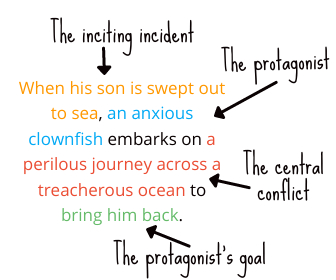
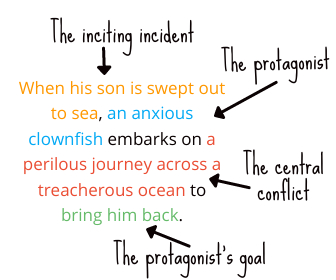
Last time we used the logline from Finding Nemo to understand the different parts of a logline. Here’s a quick reminder.

What does it mean?

Be swept out to sea: The strength of the sea carries him further out into the sea

Embark on something (verb): Start doing something new, exciting or difficult. For example you can embark on a journey or a new career

Perilous (adjective): Something that is very dangerous. For example, a perilous journey, a perilous mountain pass

Treacherous (adjective): Something that is very dangerous and unpredictable. For example, treacherous weather conditions, treacherous waves at sea, a treacherous stretch of the journey

In our example, the protagonist, or the main character, is an anxious clownfish. The protagonist’s goal is his overall aim in the film, which in this case is to bring back his son.

Introducing the protagonist’s goal

In the original Finding Nemo logline, the protagonist’s goal appears at the end of the logline as the reason for embarking on a journey across the ocean.

When his son is swept out to sea, an anxious clownfish embarks on a perilous journey across a treacherous ocean to bring him back.

You can see that the protagonist’s goal takes the verb form ‘to + infinitive’. We use ‘to + infinitive’ to give the reason of doing something. Here are some more examples.

  • Back to the future: He went back in time to reunite his parents
  • Elf: He ventures outside the North Pole to find his biological father

Try it!

Use to + infinitive to write the protagonist’s goal for your film project as the reason for doing something using the following structure: The protagonist does X to + infinitive + the protagonist’s goal.

A quick look at our alternative logline for Finding Nemo shows that certain verbs and nouns are often used to introduce the protagonist’s goal.

An anxious clownfish endeavours to bring back his lost son without succumbing to the perils of a treacherous ocean during his journey.

Some of these words, like endeavour, are about attempting to do something, while others are about deciding to it, wanting to do it, or doing it out of necessity or responsibility. Here are some examples of each. Can you guess what the films are from the loglines? The answers are below!

Attempts
  • A widowed new dad copes with doubts, fears, heartache and dirty diapers as he sets out to raise his daughter on his own.
  • A small-time boxer gets a supremely rare chance to fight a heavy-weight champion in a bout in which he strives to go the distance for his self-respect.
Decisions
  • A depressed suburban father in a mid-life crisis decides to turn his life around after becoming infatuated with his daughter’s attractive friend.
  • An insurance salesman determines to claim his right to a real life when he discovers that his whole life is actually a reality TV show.
Necessity
  • A young F.B.I. cadet must confide in an incarcerated and manipulative killer to receive his help on catching another serial killer who skins his victims.
  • A young janitor at M.I.T. has a gift for mathematics but needs help from a psychologist to find direction in his life.
Responsibility
  •  When a killer shark unleashes chaos on a beach community, it’s up to a local sheriff, a marine biologist, and an old seafarer to hunt the beast down.
  • A pragmatic paleontologist touring an almost complete theme park on an island in Central America is tasked with protecting a couple of kids after a power failure causes the park’s cloned dinosaurs to run loose.
Wants
  • Several historical events from the 20th Century unfold from the perspective of an Alabama man with an IQ of 75, whose only real desire is to reunite with his childhood sweetheart.
  • Over the course of several years, two convicts form a friendship, seeking consolation and, eventually, redemption through basic compassion.
Did you guess the film?

Attempts

  • Fatherhood
  • Rocky I

Decisions

  • American Beauty
  • The Truman Show

Necessity

  • Silence of the lambs
  • Good Will Hunting

Responsibility

  • Jaws
  • Jurassic Park

Wants

  • Forrest Gump
  • Shawshank Redemption

How to use it

Have you noticed that each of these phrases to introduce the protagonist’s goal has a certain pattern? The pattern for ‘endeavour’ is

  • endeavour + to infinitive

Can you see any other phrases in the loglines above with the same pattern?

Here are the patterns for the phrases in our above loglines as well as a few other related phrases.

Verb/ Phrasal Verb + to infinitiveVerb + infinitiveVerb/ Phrasal Verb + object + to infinitive Noun + is + to infinitivebe + past participle + preposition + verb+ingVerb + noun
AttemptsEndeavour
Attempt
Try
Strive
Set out
DecisionsDecide
Determine
NecessityNeedMust Need
ResponsibilityBe up to is tasked with
WantsDesireDesireSeek

Try it!

Have a think about the protagonist in your film project. Which of the above categories best describes the reason for your protagonist’s goal? Now try to write the protagonist’s goal for your film project. Feel free to share it with me if you would like some support to perfect your logline in English. I’d love to read it. You can email me at nji.swerdlow@gmail.com.


You can learn more about how to write your loglines in How to Pitch Your Project in English, the English course that helps you to make the most of your opportunity to pitch your film project. If you would like support with your English to get ready for a specific opportunity then why not find out more about English Consultation Sessions.

Do you need to pitch your film project in English?

Are you a film producer, director, or scriptwriter who would like international support to fund, distribute or collaborate on your film projects?

How to pitch your project in English is a specialised one-to-one English course that helps you to get your film project off to the best start by pitching your film projects more effectively and confidently in English. In two months you can learn the skills that you need to request a pitch meeting, pitch your film project, and follow up on your pitch.

If you’d like to know more about How to pitch your project in English, then send me a message or click on the link below.

I hope you found this blog post useful. If you think that it would help a colleague then why not share it with them. Let me know about your experience of writing loglines or pitching film projects. I’d love to hear from you.

How Finding Nemo can help you to write loglines in English

English grammar for writing loglines part 1: the inciting incident

If you have pitched a film project before the chances are you’ve had to write a logline in your own language. Today we are going to talk about how to structure loglines in English.

A logline is your first opportunity to introduce your film project to a decision-maker such as a producer or a studio executive and to capture their interest in it. If someone asks you what your film is about, your logline is your most succinct answer. You can go into more detail later in your conversation.

The skill of writing a logline is to find the essence of your film project and summarise it in one or two sentences in a way that the listener will immediately understand and engage with. Writing an attention-grabbing logline is challenging in our own language, let alone in another language. So, let’s look at the English that we need to write a strong logline.

The elements of a logline

Most loglines include the following elements:

  • the protagonist: who the main character is
  • the inciting incident: the event that sets up the main premise of the film
  • The protagonist’s goal: what the protagonist is trying to do
  • The central conflict – The obstacle that makes it difficult for the protagonist to achieve his/her goal.

Let’s see how these elements fit into a logline.

What does it mean?

Be swept out to sea: The strength of the sea carries him further out into the sea

Embark on something (verb): Start doing something new, exciting or difficult. For example you can embark on a journey or a new career

Perilous (adjective): Something that is very dangerous. For example, a perilous journey, a perilous mountain pass

Treacherous (adjective): Something that is very dangerous and unpredictable. For example, treacherous weather conditions, treacherous waves at sea, a treacherous stretch of the journey

Structuring our logline

The Finding Nemo logline follows the below structure:

When (the inciting incident) happens (the protagonist) overcomes (the central conflict) to achieve (the protagonist’s goal).

By putting the inciting incident at the start of the logline, we are emphasising it. However, other structures are possible. Compare it to this alternative logline

An anxious clownfish endeavours to bring back his lost son without succumbing to the perils of a treacherous ocean during his journey.

What does it mean?

Endeavour to do something (verb): to try hard to do something. For example, he endeavoured to find a permanent solution to the problem.

Succumb to something (verb)

What do you think of our new logline? This time we’ve put the protagonist and his goal at the front. The central conflict is treated as a risk that the protagonist must avoid, and the inciting incident is implicit in the adjective ‘lost’. The structure is

(The protagonist) attempts to achieve (the protagonist’s goal) without becoming a victim of (the central conflict) .

You can see that reorganising the elements of a logline gives us a lot of possibilities to consider.

Try it!

Can you reorganise the elements of the Finding Nemo logline to make a new logline?

Bricks and mortar

If the elements of a logline are the bricks, then the words that introduce each of the elements form the mortar that holds the bricks in place. To give you an idea of what sort of words these are, let’s look at our Finding Nemo examples.

MortarBrick
(the inciting incident)
Brick
(the protagonist)
MortarBrick
(the central conflict)
MortarBrick
(the protagonist’s goal)
Whenhis son is swept out to sea,an anxious clownfishembarks ona perilous journey across a treacherous oceantobring him back
Brick
(The protagonist)
MortarBrick
(Protagonist’s goal/inciting incident)
MortarBrick
(The central conflict)
An anxious clownfishendeavours tobring back his lost son without succumbing tothe perils of a treacherous ocean during his journey.

In this blog we are going to focus on introducing the inciting incident. Keep an eye out for future blogs to learn more about how to introduce the protagonist’s goal and the central conflict in English.

Introducing the inciting incident

In our logline, the inciting incident is introduced by ‘when’ followed by the present simple passive.

  • When his son is swept out to sea….

We could also introduce the inciting incident using ‘after’, or ‘once’ followed by the present simple. Here are some examples

– When
– After
– Once
an anxious clownfish (suddenly)– realises that
– discovers that
– finds out that
his son has been swept out to sea,

As you can see, we can either introduce the inciting incident itself or the protagonist finding out about it. Using adverbs can help us to suggest the tone of the project. The use of ‘suddenly’ brings a sense of immediacy.

The inciting incident can also be implicit from the context or implied by an adjective such as the use of ‘lost’ in our alternative logline. This can free up space to talk about the protagonist’s goal and the central conflict, as in the logline for Fatherhood (2021) below:

A widowed new dad copes with doubts, fears, heartache and dirty diapers as he sets out to raise his daughter on his own.

What does it mean?

Widowed (adjective): Describes a person whose wife or husband has died. A man whose wife has died is a widower. A woman whose husband has died is a widow.

Cope with (verb): To manage a difficult situation successfully. For example, He coped admirably with bringing up a child as a single parent

A diaper (US, noun): Disposable underwear for babies. British English: A nappy. For example, I’m going to go and change her diaper.

In this logline, ‘widowed’ is enough to tell us what the inciting incident is. Spending more words on the death of the protagonist’s wife would change the focus of the logline. This is a good example of why it’s important to use words sparingly in a logline and make every word count.

Try it!

How explicit should the inciting incident be in your logline? Try writing the inciting incident for one of your film projects or a film that you know well.

Feel free to share it with me if you would like some support to perfect your logline in English. I’d love to read it.

You can learn more about how to write your loglines in How to Pitch Your Project in English, the English course that helps you to make the most of your opportunity to pitch your film project. If you would like support with your English to get ready for a specific opportunity then why not find out more about English Consultation Sessions.

Do you need to pitch your film project in English?

Are you a film producer, director, or scriptwriter who would like international support to fund, distribute or collaborate on your film projects?

How to pitch your project in English is a specialised one-to-one English course that helps you to get your film project off to the best start by pitching your film projects more effectively and confidently in English. The course is made up of 15 personalised lessons that help you to learn the skills that you need to request a pitch meeting, pitch your film project, and follow up on your pitch.

If you’d like to know more about How to pitch your project in English, then send me a message or click on the link below.

I hope you found this blog post useful. If you think that it would be useful for a colleague then why not share it with them. Let me know what you think and about your experiences of pitching film projects in English. I’d love to hear from you.

How can reading and listening help you to speak English confidently at work?

I’d like to give you some ideas about how reading and listening in English can help you to sound professional in English at work.

Do you need to talk in English at work? Many of us need to use our English to speak to colleagues, clients, or suppliers.

The difficulty is that the language that we use in our jobs can be about really specific topics, which you may not have learnt about in your English class at school. So, how can we improve our ability to talk professionally in English in our careers.

Learn from the best

Let’s start by looking at what good language learners do. Have you ever noticed that some people seem to have the ability to make language learning look easy? How do they do it? Well, most of them

  • read or listen a lot in the language
  • take an interest in new language, and make guesses about what it means and how to use it
  • and take opportunities to speak to people in the language about topics that are useful and interesting to them

Listening and reading about your profession in English not only improves your professional knowledge, it also improves your English. There’s a lot that you can do independently to learn from what you read or listen to. Here are some ways that you can turn reading and listening into language learning opportunities:

  • Write or record a summary of what you have read, watched, or listened to: This is a great way to check how much you understand and reuse some of the language that you have noticed. If you want to practise your pronunciation then record yourself summarising the article, video or podcast. When you’ve finished, check your summary against the original. How well did you understand it? Were you able to correctly reuse some of the language that you read or listened to in your own sentences? Did the writer express the same ideas to you in different ways?
  • Write and answer discussion questions: Once you feel that you understand what you’ve read or listened to, try to relate it to your own experiences or give an opinion on it. A good way to do this is to write your own discussion questions and then practise answering them in English. You could make questions like…‘Do you agree with the speaker’s opinion on…?’ or ‘How similar is your experience to the writer’s?
  • We’d like to interview you, please: There are a number of good podcasts where professionals are interviewed. Listen to an interview with a professional in your area of work. Listen to the question and the answer, and then press pause. Now, answer the question for yourself like you are being interviewed. If the question doesn’t relate perfectly to your situation then change it slightly. This is a great way to practise expressing an opinion on a relevant topic, and giving reasons for your opinion. You can also comment on the answer that you’ve just heard. If you find it difficult to express your thoughts then go back and listen to how the person being interviewed talks about similar ideas in English.

I hope you find these activities useful. Let me know what you read, watch or listen to, and how you use these blogs, videos and podcasts to practise your English. I’d love to hear from you.

Would you like support to learn more English from what you read, watch, or listen to?If so then Enjoy it in English and learn is a great opportunity for you.

Enjoy it in English, and learn

Do you spend time watching your favourite TV show, reading a book or listening to a podcast in English. It’s a great way to learn the language. The problem is that many of us don’t learn very quickly. Enjoy it in English and learn is not your normal English course.

I won’t tell you what to read or listen to, or even what to talk about. What I will do is help you to learn from what you enjoy reading, watching and listening to in English by helping you to actively notice new language, talk about it, and practise using it. In short it helps you to fit learning English into your life.

So, how does it work?

You can join the Enjoy it in English and learn as a 1-to-1 class, or in small group class with a friend. Here’s what happens:

  1. We have a conversation about what to read, watch or listen to in English, and how to learn from it.
  2. You decide what you would like to read, watch or listen to in English, and how much time you can spend doing that per week.
  3. Each week you read, watch or listen to what you have chosen, and you make notes on your Enjoy it in English and learn journal.
  4. We meet and talk about what you have read, watched, or listened to, the use of English in it, and the discussion topics relating to it. This is your chance to practise speaking and to learn from the English that we use.

I can’t wait to find out what you’ve been reading, watching or listening to!

If you’d like to know more about Enjoy it in English and learn, then book a time to have a chat with me. It would be great to hear from you.

How can reading and listening help you to talk about filmmaking in English?

I’d like to give you some ideas about how reading and listening in English can help you to talk about filmmaking in your job as a professional in the film industry. I’ll also tell you about The English Filmmaking Conversation, an opportunity for you to practise talking about filmmaking and develop your professional English.

Do you need to talk about filmmaking in English? In an increasingly international industry, many professionals need to have conversations about filmmaking on international projects or at film festivals.

Talking about making films is really interesting, but it’s also a really specific topic to be able to talk about well if English isn’t your first language. For example, most English classes at school don’t teach you how to talk about post production, which brings us to the question, how can we improve our ability to talk about filmmaking in English.

Learn from the best

Let’s start by looking at what good language learners do. Have you ever noticed that some people seem to have the ability to make language learning look easy? How do they do it? Well, most of them

  • read or listen a lot in the language
  • take an interest in new language, and make guesses about what it means and how to use it
  • and take opportunities to speak to people in the language about topics that are useful and interesting to them

Listening and reading about filmmaking in English not only improves your filmmaking knowledge, it also improves your English. There’s a lot that you can do independently to learn from what you read or listen to. Here are some ways that you can turn reading and listening into language learning opportunities:

  • Write or record a summary of what you have read, watched, or listened to: This is a great way to check how much you understand and reuse some of the language that you have noticed. If you want to practise your pronunciation then record yourself summarising the article, video or podcast. When you’ve finished, check your summary against the original. How well did you understand it? Were you able to correctly reuse some of the language that you read or listened to in your own sentences? Did the writer express the same ideas to you in different ways?
  • Write and answer discussion questions: Once you feel that you understand what you’ve read or listened to, try to relate it to your own experiences or give an opinion on it. A good way to do this is to write your own discussion questions and then practise answering them in English. You could make questions like…‘Do you agree with the speaker’s opinion on…(the advantages of filming on location?)’ or ‘How similar was your experience of…(getting started in the film industry) to the writer’s?
  • We’d like to interview you, please: There are a number of good podcasts where filmmakers are interviewed. Listen to an interview with a filmmaker. Listen to the question and the answer, and then press pause. Now, answer the question for yourself like you are being interviewed. If the question doesn’t relate perfectly to your situation then change it slightly. This is a great way to practise expressing an opinion on a filmmaking topic, and giving reasons for your opinion. You can also comment on the answer that you’ve just heard. If you find it difficult to express your thoughts then go back and listen to how the filmmaker in the interview talks about similar ideas in English.

I hope you find these activities useful. Let me know what you read and listen to, and how you use these blogs, videos and podcasts to practise your English. I’d love to hear from you.

I can help you to improve your filmmaking English and practise talking about filmmaking more effectively. If you’d like to know how, read on.

The English Filmmaking Conversation

The English Filmmaking Conversation is your opportunity to

  • Enjoy discussing interesting filmmaking topics in English
  • Listen to in-depth interviews with filmmaking professionals, and learn English from them
  • Practise listening and speaking in English about filmmaking topics

So, how does it work?

You can join the English Filmmaking Conversation for 1-to-1 sessions, or for small group sessions with a friend or colleague. Here’s what happens:

  1. You listen to part of an interview with a filmmaker from a podcast in your own time. You’ll also get a worksheet with activities to help you to understand the interview, and discussion topics to think about
  2. We meet and talk about the interview, the English in it, and the filmmaking topics relating to it. This is your chance to practise speaking and to learn from the English that we use.

Each week you’ll receive the next part of the same interview to listen to, and we’ll meet to talk about it. There are 4 parts to each interview.   

The first interview is with David Oyelowo, a really interesting and thought-provoking actor and director.

I can’t wait to discuss interesting filmmaking topics with you such as

  • the challenges of getting funding for projects,
  • and the best advice you received when you were starting out in your career

Start listening for free

Click on the link above to listen to part 1 of the interview using the worksheet to help you.

If you’d like to know more about the English Filmmaking Conversation, then book a time to have a chat with me. It would be great to hear from you.

Scriptwriters: How to start your film pitch in English

There’s a lot of pressure on the start of a film pitch.

You need to grab people’s attention quickly, and a complicated set up won’t engage your listeners in your pitch. So, where do you start? Michael Hauge recommends beginning by talking about how you came up with the idea for the film project in the first place. Here’s Spike Jonze, the scriptwriter, director and co-producer of Her (2013), talking at the start of the video about how the idea for the film came to him.

Real English: Come up with something

To come up with something means to think of an idea or a plan for something.

You can come up with

  • an idea
  • a plan
  • a storyline
  • a title for a film
  • a solution to a problem

Example: I’ve come up with an idea for an interesting twist in the plot.

Try it!

What film or TV ideas have you come up with recently?

Real English: Get a buzz

Spike Jonze said that the idea for Her was based on the buzz that he got from talking to an artificial operating system in the first 20 seconds.

What is a buzz?

A buzz is a pleasurable feeling of excitement and energy that we get from doing something.

How is it used?

Get a buzz out of + verb + ing (exciting activity)

Example: I get a buzz out of seeing my film ideas come to life.

Try it!

What exiting activities do you get a buzz out of doing?

As you can see, this story helps Spike Jonze to show that his film relates to our modern lives. You might also notice that he talks quite engagingly about the concept of the film because the idea clearly caught his interest from the start. As well as being a common question when being interviewed by the media, this also works as a pitching strategy for three reasons.

  • Firstly, it provides an easy pathway from the small talk at the start of your pitch meeting to actually pitching your film, avoiding any sense of a sharp cut between finishing small talk and giving your pitch.
  • Secondly, it puts the idea for the film into the context of a lived experience. Imagine a pitch for Her that starts like this ‘Imagine, a man falls in love with his artificial intelligence operating system….’. Without any sort of context, the plot would sound contrived. The most natural context for a film is how you came up with the idea to begin with.
  • Thirdly, explaining how you thought of the idea helps you to show your passion for the film quickly because it allows you to talk about what made you first think it was a good idea for a film. As you can see from the video, this makes it easier to talk naturally, engagingly, and with conviction.

Starting your pitch

So, here is what the start of a pitch for Her might look like based on how he came up with the idea for the film.

I think that the best way to tell you about my film project is to tell you how I came up with the idea for it. A while ago I was reading an article, and it had a link to a site where you can talk to one of those artificial intelligence computer programmes, so I tried it and for the first 20 seconds it felt just like having a chat with a real person, and I started thinking what if a man falls in love with his computer operating system...

Pitching in English

Let’s have a look at the English that we can use to start your pitch in a similar way.

I think that the best way to tell you about my film project is to tell you how I came up with the idea for it.

The first sentence is important because it signals to the decision-maker how we are going to approach our pitch.

A while ago I was reading an article and it had a link to a site where you can talk to one of those artificial intelligence computer programmes, so I tried it and for the first 20 seconds it felt just like having a chat with a real person…”

When did it happen?

The second part tells a short story about the incident that led to the idea for the film project. People usually start anecdotes with a time reference like

  • A while ago
  • A few months ago
  • Recently
  • Last year
Verb tenses: telling a story about how the idea came to you

In our pitch, the story of what he was doing when he thought of the idea is in past continuous (I was reading…), and past simple (it had a link…, I tried it…, it felt just like...). We often use these tenses together to tell anecdotes about things that have happened to us.

  • Past continuous tells us what we were doing in the past when an important event or action happened, which gives the context to your story. For example:
    • A while ago I was reading an article and it had a link to a site where you can talk to one of those artificial intelligence computer programmes
    • I was waiting for my daughter outside her school
    • I was at a dinner party and a French guy was telling me about his difficulties in making friends as an adult in a new country
  • Past simple tells us the main action or event in your story. When you explain how you thought of the idea for your film project, this will often be a thought or a feeling.
    • A while ago I was reading an article and it had a link to a site where you can talk to one of those artificial intelligence computer programmes, so I tried it and for the first 20 seconds it felt just like having a chat with a real person
    • I was waiting for my daughter outside her school, when just for a moment I thought what if she doesn’t come?
    • I was at a dinner party and a French guy was telling me about his difficulties in making friends as an adult in a new country, which made me wonder why integrating is so difficult for adults and whether it would be true for people integrating into other cultures.

As you can see from this last example, this strategy could be used for pitching documentaries as well as fiction.

Note: Past continuous and past simple are really useful for telling a story about something that happened, but you don’t need them to explain the plot of your film project. Plots are normally told using present simple. You can see this in the last part of the start of our Her pitch.

“and I started thinking what if a man falls in love with his computer operating system…”

The phrase ‘and I started thinking what if…’ helps us to lead our anecdote about coming up with the idea for the film into our actual pitch. It shows your interest in the concept of the film project and helps to raise the interest of the decision-maker.

Try it!

How did you come up with your most recent idea for a film project?

  • What were you doing when the idea came to you?
  • What idea did you have?
  • How did this idea lead you to a concept for a film project?

Let me know how you get on with your film pitch. I’d love to hear about it. If you found this blog post useful, please like it or leave a comment.

If you would like to pitch your film projects in English more effectively, then read on to find out more about the How to Pitch Your Project in English, the English course that helps you to make the most of your opportunity to pitch your film project.

Do you need to pitch your film project in English?

Are you a film producer, director, or scriptwriter who would like international support to fund, distribute or collaborate on your film projects?

How to pitch your project in English is a specialised one-to-one English course that helps you to get your film project off to the best start by pitching your film projects more effectively and confidently in English. The course is made up of 15 personalised lessons that help you to learn the skills that you need to request a pitch meeting, pitch your film project, and follow up on your pitch.

If you’d like to know more about the How to pitch your project in English, then send me a message or click on the link below.

A little about Nick

As a highly-qualified and experienced English teacher I work with learners to enable them to express their ideas effectively in English when it matters, so that they can make the right impression in meetings and conversations. It gives me huge satisfaction to see the progress that my learners make.

I’ve always been a film fan, and teaching filmmakers has been a fascinating insight into the film industry, which has given me an understanding of the language skills that you need to perfect your film pitch in English.

Working as an independent teacher with my own teaching enterprise has taught me the importance of understanding learners’ needs and aims, and ensuring that my messaging talks to those aims. In the same way, your messaging in your meeting needs to talk to the aims of the person in front of you. Together, we can perfect your message so that you can be effective and confident in your English pitch-meeting.

Get your English into shape!

The way we do exercise gives us a useful insight into how to improve our English.

Learning a language can seem like a long road with an uncertain outcome at the end, which can make it difficult to know where to start. However, as an English teacher that enjoys running, I’ve found that there are a lot of similarities between the way we stay fit and the way we learn languages, so what can we learn from the world of exercise?

Getting started

When was the last time that you had a break from doing exercise? Maybe you injured yourself, or maybe you didn’t like the idea of going out in the cold to work out. How difficult was it to get back into a routine of exercising regularly? I know from my own experience that getting started with an exercise routine is much harder than keeping it going once it has become part of your normal week.

Practising English is a bit like that. Getting into the habit of practising English regularly isn’t easy, but once you build up momentum and you can see your progress, it’s a lot easier to keep going. 

So how do we get into the habit of practising our English regularly? Well, there’s a lot that we can learn from the way we do exercise. 

Planning ahead

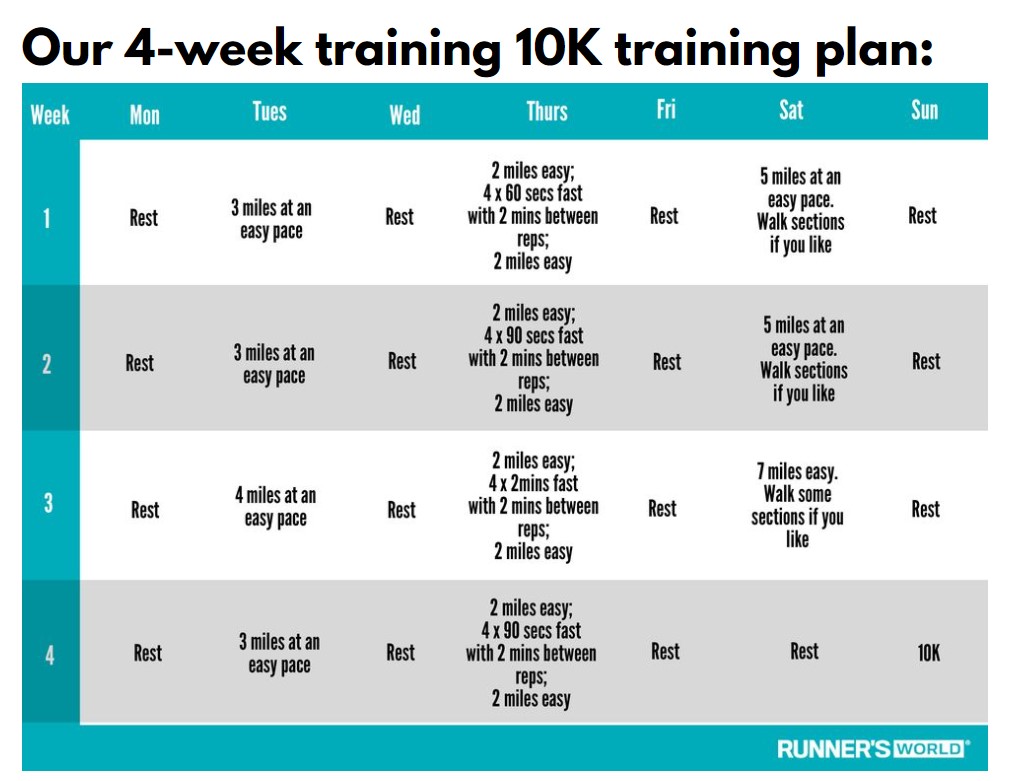
I’d like to get back to running 10 kilometres without having to stop every now and then to catch my breath. To do that I need to go for a run more than once a week and build up the distance that I run over time. Whether you’d like to cycle further, lift heavier weights, or get to the next level of your exercise routine, you also need to plan when you are going to do exercise, and what you’re going to do. 

I’ve tried not planning ahead and the result was simple: I didn’t do any exercise because other things got in the way!

To improve your English you need to plan ahead in a similar way. Try thinking about these questions when you plan your English practice:

  • How often are you going to practise my English? – Have a look at your diary for your next week. Think about when you can fit English practice into your day. Try to be realistic with yourself.
  • How long are you going to practise my English for? – A bit like exercise, practising English can take varying lengths of time depending on what you plan to do. For example, reviewing your flashcards or your Duolingo app might only take 10 minutes and fit neatly into your lunch break. Try to break your English practice into manageable chunks of time so that you don’t lose concentration.
  • When are you going to practise my English? – Look at your diary. When do you have time to practise English? Also think about how you normally feel at different times of the day. If you are a morning-person, perhaps you can fit in English practice before work. If you always feel tired after work, you might need a break before practising your English. 
  • What are you going to practise? – Deciding what to practise isn’t as easy as it sounds. Try making lists of
    • things you find difficult to do in English
    • things you need to do in English
    • things you want to be able to do in English

Reviewing what you’ve learnt is a good idea, but try to practise a range of different English skills during the week.

Now try to write a plan of what you are going to do in each of your exercise sessions during the week. You can use a diary, but I find that an online calendar like Google Calendar works well for this because you receive reminders.  

You don’t have to go to the gym to lead an active lifestyle

As wonderful as going to the gym is, there are other ways to stay active. You can fit activity into your daily routine by cycling to work for example.

Similarly, you can also make English part of your daily routine. Just like you swap your car for your bike, you can also start to do some of your daily activities in English instead of your own language. Here are some examples: 

  • Staying in and watching TV: Try watching something in English with English subtitles if you like. These days streaming services like Netflix make this a lot easier. If you find it tiring to watch a full film in English, then watch shorter episode of a TV show. Films and TV series can be difficult to follow, so you might like to try a TV show that you’ve seen before in your language, or one with a more predictable format where the pictures help you to understand what is happening.   
  • Having a chat with friends: Get in touch with someone you know who doesn’t speak your language. If it’s difficult to think of someone suitable, you might like to look for someone on social media whom you can practise speaking English with. You could help them to practise speaking your language in return.
  • Use the internet in English: Try changing your language settings to English for your computer, Google, and your favourite websites. Next time you buy something on Amazon, you could read about the product and check the reviews in English! 

And don’t forget these are learning opportunities, so try to make the most of them. After you’ve finished watching TV, find out what that phrase that you didn’t quite understand means, and how you can use it. When you talk to someone in English, try out that new expression that you learnt the other day. 

Give yourself a goal!

A few years ago I used to run 10km in under 50 minutes, so I’m aiming to get back doing 10km runs in those kinds of times. Having a goal helps me in a few different ways. 

  • Motivation: It’s motivating because you have a clear and precise idea of what you want to achieve, and you know when you’ve achieved it.
  • Steps: If you have a goal, you can then decide what steps you need to take to achieve it
  • Reflection: Having a goal allows you to reflect on what progress you have made so far to achieve it. It is difficult to do this if you don’t know what you are aiming to achieve. 

What makes a good language-learning goal?

The problem with a general goal of improving your English is that, unlike timing a run, it’s almost impossible to say when you’ve achieved it. Think about these questions; How much do you want to improve your English by? What will your English look like when it has improved? How will you know when you’ve got to this point?

You might decide that you want to learn 20 new words each week. This goal is a bit easier to measure, but has nothing to do with how you would like to use your English. Think about why you want to improve your English in the first place. What would you like to be able to do with your English that would help you in your life? Now try to make goals based on that. Here are a few ideas of clear goals that relate to our lives to help you think about what you’d like to achieve with your English:

  • Do a job interview confidently in English understanding the questions and representing yourself well in your answers
  • Watch your favourite TV show in English without following the subtitles
  • Take part in a group conversation in English following the conversation and participating appropriately
  • Understand a joke in English
  • Make people laugh in English 

I’m sure you can think of English goals that relate to your life. Whatever they are, try to make them as clearly defined as possible so that you know when you have achieved your goal.  Once you have a goal, work backwards and decide what steps you need to take to achieve it. Set your self short-term goals to help you on your way.

Sometimes it helps to talk about through your English goals and how to achieve them. I’ have a lot of experience of helping language learners to develop their English to make the most of their opportunities, and I would love to hear about why you would like to improve your English.

Activate Your English

The conversational English course

Would like to

  • find the right words at the right time to fully express yourself in your daily conversations?
  • feel part of English conversations
  • get to know people better at work and in your daily life
  • make the most of your English-speaking life for you and your family

If your answer to these questions is yes, then the Activate Your English course could be for you. Click on the link below to find out more. 

I can’t wait to hear from you

Nick Swerdlow

https://nick-teaches.com

How to get your pitch meeting off to the best start in English

Making small talk 2: Building a conversation

This is the second of two blog posts on making small talk before you pitch your film project. If you haven’t had a chance to read the first post, which is all about starting the conversation, then you might like to read it first by clicking on the link below.

So, you’ve just started your pitch meeting! You’re in the room, and you’ve started up some casual conversation before you pitch your next film project. The decision maker is responding to your question. How do you make a good impression now?

If you’d like the decision-maker to be receptive to your pitch, you actually need to listen attentively to the answer and respond appropriately to it. Does that sound easy? Well, think about this the next time you have a conversation; while you are listening to the other person speak, at what point do you decide how you’re going to respond? After he or she has finished speaking, or before? Research shows that most people decide how to respond before their partner has finished talking, and that instead of listening to understand the person’s answer, we usually listen just enough to decide how to respond to them.

The best responses are based on listening fully and attentively to what the other person has to say, and considering it. Although this might lead to very short pauses in your conversation, conversations are not a race! It’s much more important to respond well, than to respond quickly.

Try it!

Next time you have a conversation, and you’re listening to someone speaking, focus on when you decide how to respond. Try to listen attentively to all of what the other person sayS before considering your response.

Of course, you may not always understand exactly what the decision-maker says, especially if English is not your first language. If this happens, don’t be afraid to ask for clarification. You can say something like:

Sorry, I didn’t quite catch that. Would you mind repeating it?

Or,

Sorry, what do you mean by…?

If you want others to like you, if you want to develop real friendships, if you want to help others at the same time as you help yourself, keep this principle in mind:
become genuinely interested in other people.

Dale Carnegie,
How to win friends and influence people

Be interested, not interesting

There are two big reasons why you should be interested in what the decision-maker says instead of trying to sound interesting. Firstly, people appreciate having a conversation where they feel that the other person has taken a genuine interest in what they were saying, meaning that the decision-maker is more likely to have a positive impression of you when you start your pitch. How did you feel the last time this happened to you? Secondly, this is your chance to understand what type of person you are pitching to and what the he or she is looking for, which is invaluable information.

This means that you should listen attentively, show that you’re interested, and ask questions to encourage the decision-maker to open up, and to make you both feel at ease. Let’s think about how to do this in English. Imagine that you’ve asked the decision maker about the film festival that you’re at, and she has answered like this:

“I’ve been so busy, but I’ve really enjoyed some of the short films that I’ve managed to see here.”

Which of these responses do you prefer, and why?

  1. Yeah, I know what you mean. I’ve been so busy with appointments this week that I’ve hardly had time to catch my breath. I did see a really interesting short yesterday though. It’s called…
  2. Yes, I can imagine. You must have a lot on this week. There are some really interesting short films on this week. Which of them in particular have caught your eye?

The first response initially sounds empathetic (Yeah, I know what you mean…), but quickly moves the conversation away from the decision-maker and on to you, meaning that she doesn’t feel that we have taken an interest in how busy she is or her thoughts on the films she saw.

The second response is more empathetic focusing on the decision maker’s experience of the festival. It also shows an interest in her comment about short films, not by saying ‘I’m interested‘, but by picking up on what she was saying enthusiastically, which shows that we are listening keenly. By asking a question, we encourage conversation, which will give us useful information when we come to pitch our project.

So, what can we learn from this example? Well, it turns out that when we build a short conversation with the decision maker, we should remember Princess LEIA from Star Wars!

  1. Listen – to understand, not just to respond
  2. Empathise – understand the other person’s point of view, not just our own experience
  3. Express Interest – to show that we listened keenly
  4. Ask a question – to encourage conversation

Here are some examples of English phrases that you can use to help you to respond when you make small talk.

Showing EmpathyExpressing interestAsking questions
– I know what you mean.
– I can imagine.
– You must (be busy)
– That sounds (challenging)
– Really? I didn’t know that.
– That’s interesting!
– Really! I’d love to hear more about that.
– Me too. I really enjoy…
– Tell me more about that.
– Are you a fan of…(type of film) then?
– What did you think of…
– Have you had the chance to…(watch…)

Try it!

Now, it’s your turn to try using LEIA. How would you respond to this comment from a decision-maker?

“This is actually my first time at a European film festival. It makes an interesting change from Sundance in Utah.”

It would be great to hear your response in the comments below.

Next time you make small talk try using LEIA to help you to respond in a way that builds conversation.

Read the room

Of course, the small talk that you make before your pitch is a short conversation to help you to both feel comfortable. This is not the time or the place for a long chat, so you need to know when to draw the conversation to a close. Perhaps, the decision-maker will invite you to give your pitch, or perhaps you’ll have to read his or her body language. Try to close the conversation on a positive note as you move on to your pitch. You could say something like:

I really enjoyed hearing about your… Would now be a good time to tell you about…(name of project)?

I hope that you’ve found this post useful and that you enjoy making small talk in English. I’d love to hear how you get on in your pitch meeting.

Do you need to pitch your film project in English?

Are you a film producer, director, or scriptwriter who would like international support to fund, distribute or collaborate on your film projects? Pitch Your Project is a specialised one-to-one English course that helps you to get your film project off to the best start by pitching your film projects more effectively and confidently in English.

If you’d like to know more about the Pitch Your Project English course, then send me a message or click on the link below.

A little about Nick

dav

As a highly-qualified and experienced English teacher I work with learners to enable them to express their ideas effectively in English when it matters, so that they can make the right impression in meetings and conversations.

I’ve always been a film fan, and teaching film producers and directors has been a fascinating insight into the film industry, which has given me an understanding of the language skills that you need to perfect your film pitch in English.

Working as an independent teacher with my own teaching enterprise has taught me the importance of understanding learners’ needs and aims, and ensuring that my messaging talks to those aims. In the same way, your messaging in your meeting needs to talk to the aims of the person in front of you. Together, we can perfect your message so that you can be effective and confident in your English pitching-meeting.

How to make a good impression in English at the start of your pitching meeting

Making small talk

Think of the last time you had an appointment to pitch a film project. How did you start your meeting on a positive note? Making a personal connection from the beginning helps to get your meeting off on the right foot, or in a positive way. That’s why most people start meetings with some casual, polite conversation that we call small talk. Some pitching meetings build in time for this conversation, others keep it short and sweet, limiting it to a handshake and a polite introduction like ‘Hi, I’m…(name). I’m very pleased to meet you’ . It’s a good idea to make sure that you understand the expectations in your meeting before you walk into it. In either case, the important thing is to make a positive impression from the start. This isn’t always an easy thing to do in English when it’s not your first language. If you’d like to learn how to make small talk at the beginning of your next pitching meeting, then read on.

Why does small talk matter?

In spite of the name, small talk matters because it helps you to get to know each other and to trust each other. at the start of your meeting This makes a real difference because people prefer to work with someone that they like and trust. Finding a connection with each other will help you both to feel more comfortable in the meeting, and will encourage the decision maker to be more receptive to your pitch.

How do I start the conversation?

I’m sure you prepare your pitch before your meeting, but how much thought do you give to the small talk before your pitch? It’s very tempting to focus entirely on the content of the meeting when you prepare, but it’s worth spending some time thinking about how to build a rapport with the person that you’re meeting.

So, what can we do to prepare? Start by making a list of things that you know about the person that you are going to meet. Even if you already know him or her, it’s worth doing some research by asking colleagues and looking online.

You try it!

Try making some notes about the next person that you have an appointment with in a table like the one below.

What do you know about him/herThe last time you metThings in common
Work:
When:
Colleagues:
Interests:
Where:
Interests:
Home life:What was happening in their life at the time:
Travel:

Now that you have found out about the person that you are meeting, think of personalised questions that you can ask the person that you’re meeting. These can be work-related, but shouldn’t be directly about your film project. Here are some examples of the type of questions that might help you to make a connection.

Possible conversation starters

  • Last time we met you were(looking for a house). How’s that going?
  • I believe we have a mutual acquaintance. (I used to work with your production manager, Peter Smith.) He mentioned that (you guys have been busy recently. How’s work going here?)  
  • I hear that (you’ve been working on a period drama. How are you finding it?)
  • Am I right in thinking that you’ve recently got back from the Cannes Film Festival? How was it?
  • If I remember correctly, you’ve been on holiday recently. How was it?

You’ll notice that these conversation starters have two parts. The first part is a comment on what you remember or have heard about the other person. This helps to make a good impression because it shows that you have paid to attention to what the other person has told you, and that you have taken the time to find out about the person or their company. The second part is a question, which helps to make conversation. The questions above are all open questions, which invites the other person to give a fuller answer.

What are open questions and closed questions?

Open questions can be answered in a wide range of different ways. They start with question words like how, what, when, who etc.
Example: If I remember correctly, you’ve been on holiday recently. How was it?
This helps to start conversation because the answer because it encourages the other person to talk about the holiday. Yes or no is not a sufficient answer.

Closed questions have a limited range of possible answers. They often (but not always) start with auxiliary verbs or modal verbs like do, be, have, can etc.
Example: Have you been on holiday recently?
How long did you go for?

This type question can be useful for asking for specific information once a conversation has started.

You try it!

Use your notes from before to make questions to ask the person that you are planning to meet?

Look around you

These days we all have a lot of distractions, but it’s worth taking a look around you as you go into your meeting (and generally in life!). The most natural conversations, and sometimes the best ones, come from what you notice around you. So, it’s important to be aware of what you can see, hear and taste. That might include

  • the decor in the office
  • the weather
  • the view from the office
  • the coffee
  • and many other things that are around you

What do you notice in these office spaces?

Here are some examples of phrases that we can use to make small talk based on what we notice. In the first example, we make an observation based on what we can see, and ask a question about it.

  • I notice that…(you have a photo of Berlin. Have you been there recently?)
  • I love your…
  • I really like your…
  • I’ve never seen a… like that before
  • That’s a really interesting…

You try it!

Imagine that you have a meeting in one of the offices in the pictures. Use the phrases above to comment on the your surroundings, and ask a question about it.

Don’t forget, the main aim is to make a connection with the decision maker as a person so that he or she is receptive to your pitch.

Would you like to know more?

If you found this blog post useful, then keep an eye out for my next post on how to show that you are interested in what the decision maker says at the start of a pitching meeting.

Do you need to pitch your film project in English?

Are you a filmmaker who would like international support to fund, distribute or collaborate on your film projects? Pitch Your Project is a specialised one-to-one English course that helps you to get your film project off to the best start by pitching your film projects more effectively and confidently in English.

If you’d like to know more about the Pitch Your Project English course, then send me a message or click on the link below.

I hope you’ve found this post useful. I’d love to hear what conversation starters you thought of and how you get on the next time you make small talk in English.

A little about Nick

As a highly-qualified and experienced English teacher I work with learners to enable them to express their ideas effectively in English when it matters, so that they can make the right impression in meetings and conversations.

I’ve always been a film fan, and teaching film producers and directors has been a fascinating insight into the film industry, which has given me an understanding of the language skills that you need to perfect your film pitch in English.

Working as an independent teacher with my own teaching enterprise has taught me the importance of understanding learners’ needs and aims, and ensuring that my messaging talks to those aims. In the same way, your messaging in your meeting needs to talk to the aims of the person in front of you. Together, we can perfect your message so that you can be effective and confident in your English pitching-meeting.