Welcome to The tour guide’s English tea break, a new monthly blog that gives you the chance to relax with a tea or coffee, find out about an interesting landmark from around the world, and practise useful English that you can use on your guided tour.
The first article is about one of the icons of Oxford in England.
An iconic landmark
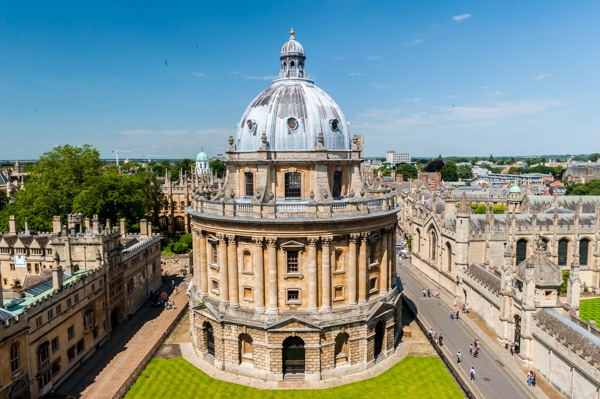
Radcliffe Square is a wide-open square in the centre of Oxford with imposing Gothic university buildings on each side. It’s usually busy with students on their way to lectures, and tourists taking photos. The Radcliffe Camera sits in the centre of the square dominating the skyline.
Now, “camera” might sound like a device for taking photos, but in Latin, it means “room.” And this is no ordinary room! The Radcliffe Camera was designed by the architect James Gibbs and finished in 1749. It is one of the best examples of English Palladian architecture—a style inspired by ancient Roman and Renaissance buildings.
The building is named after Dr. John Radcliffe, a famous doctor who treated royalty in the 17th century. Radcliffe was not only skilled in medicine, but also a great supporter of education. He left a large amount of money in his will to create a library that would benefit science and learning at Oxford. The Radcliffe Camera was built with this vision in mind, and it has stood as a symbol of knowledge ever since.
The first thing you’ll notice is the large dome at the top. The dome is impressive, isn’t it? It was inspired by famous buildings like St. Peter’s Basilica in Rome. It’s a symbol of learning and knowledge, which is perfect for a library!
Now look at the round shape of the building. This was very unusual in England at the time, and it makes the Radcliffe Camera stand out. The outside walls are decorated with tall columns in the Corinthian style, giving it a grand and elegant look. The stone used for the building shines golden in the sunlight, making it look warm and timeless.
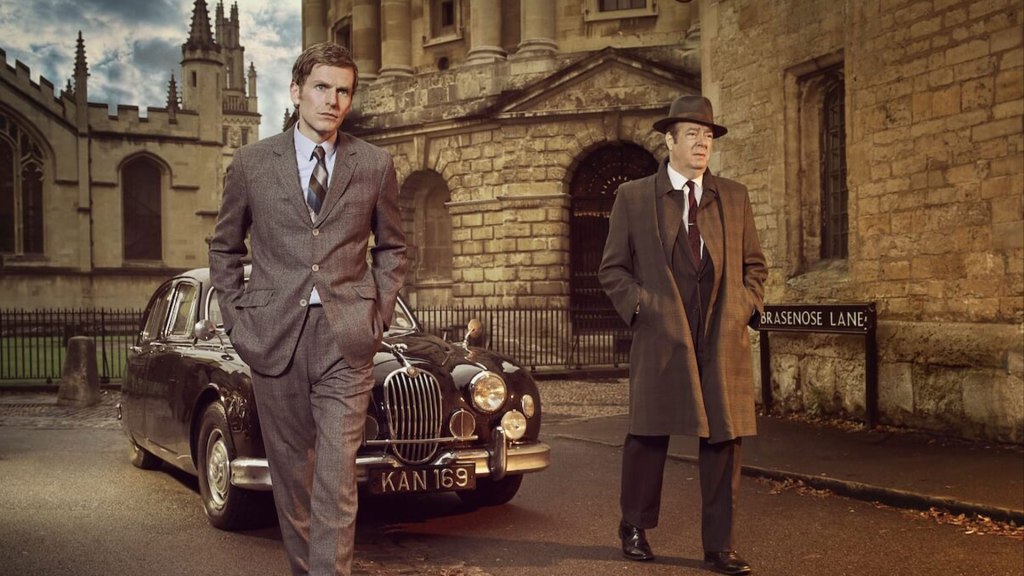
The Radcliffe Camera is not only famous in real life but also on screen! You might have seen it in TV shows and films set in Oxford, like Inspector Morse, Endeavor (pictured on the right), and His Dark Materials. These programmes often use Oxford’s beautiful architecture to create an atmosphere of mystery, history, or magic. The Radcliffe Camera is one of their favourite locations.
What makes the Radcliffe Camera even more special is how it fits with the other buildings around it. Here in Radcliffe Square, it is surrounded by the Bodleian Library, All Souls College, and St. Mary’s Church. Together, they form a picture-perfect scene that many people think of when they imagine Oxford.
What do you think?
- What do you think of this landmark?
- What did you find interesting about it?
- Can you think of any buildings that it is similar to?
How to use English: Active and passive sentences

Take a look at these two sentences. What’s the difference between them?
- The Radcliffe Camera was designed by the architect James Gibbs.
- James Gibbs designed the Radcliffe Camera.
Both sentences have the same meaning; the designer is James Gibbs, and the thing that he designed is the Radcliffe Camera.
The first sentence, which we read in the text, is passive. It starts with the Radcliffe Camera and the verb phrase is:
was (a form of the verb ‘be’) + designed (the past participle of the main verb)
The person who designed it, James Gibb is introduced using the word ‘by‘.
The second sentence is a normal active sentence. It starts with the person who did the action, James Gibb, followed by the verb (designed) in the past simple. At the end of the sentence we find out what he designed (the Radcliffe Camera).
When to use passive sentences
So, is it better to use an active sentence or a passive one here? Well, the main focus of our sentence should be the Radcliffe Camera. That’s what this blog post is about! So, it makes sense to use a passive sentence, which puts this landmark at the start of the sentence.
We often use passive sentences to talk about buildings or works of art when we want to focus on the landmark or piece of art itself instead of the architect or artist that designed or painted it. Active sentences are more likely to be used when we want to focus on the artist or architect.
Try it!
How many passives can you find in the text about the Radcliffe Camera?
Notice which verbs are used in the passive. Some verbs are more likely to be used in the passive then others. You might also notice how these verbs are used to focus on the Radcliffe Camera.
Can we make passives a bit shorter?
Normally, we need to include a form of be in a passive phrase, but we can leave it out if the passive phrase is part of a relative clause with a relative pronoun like which or that. Let’s look at an example from the text. In the example below that and was have been left out.
It is one of the best examples of English Palladian architecture—a style (that was) inspired by ancient Roman and Renaissance buildings.
Try it!
Here’s another example from the text. What words do you think have been left out?
The stone used for the building shines golden in the sunlight, making it look warm and timeless.
Answer
- that/which was (used)
Now, it’s your turn!

Think of a landmark on your tour and answer these questions about it.
- When was it built?
- Who was it designed by?
- What was the design of the landmark inspired by?
- How is the facade decorated?
- What is the landmark surrounded by?
- How was it used at the time?
- How is it used today?

Thank you for reading the first post from The tour guide’s English tea break. I hope you’ve found it useful and interesting. If you would like to find out about more interesting places and improve your English as a tour guide, then just sign up to receive more posts like this. You’ll get a new post in the last week of every month, and it only costs 4€ a month.
How else can I help you?


It would be great to hear from you. Let me know which landmarks you would like to read about in future editions of The tour guide’s English tea break.
Bye for now,
Nick
 Nick Swerdlow