
The temptation
What do you do to improve your English to work as a tour guide? It may be tempting to spend time scrolling through English videos online. But how much do these videos really help you to guide a tour in English? They are chosen for you by an algorithm based on what catches your attention, which is no way to organise your own English studies for your specific needs.
The good news!
Fortunately, you’re starting from a good place! You need English for a very specific reason, and when it comes to guiding tours, you already know your stuff! You just need to be able to talk about it in English! This gives you the chance to learn some specific English that’s really going to help you in your job.
I’ve been teaching English since 2010. (Time flies!) In that time I’ve learnt a few things about how to learn languages, so in this article I’m going to give you some ideas about how you can take control of your language learning and improve the English that you use on tours in your own time by focusing on what you find difficult to do in English.
How to improve your English independently
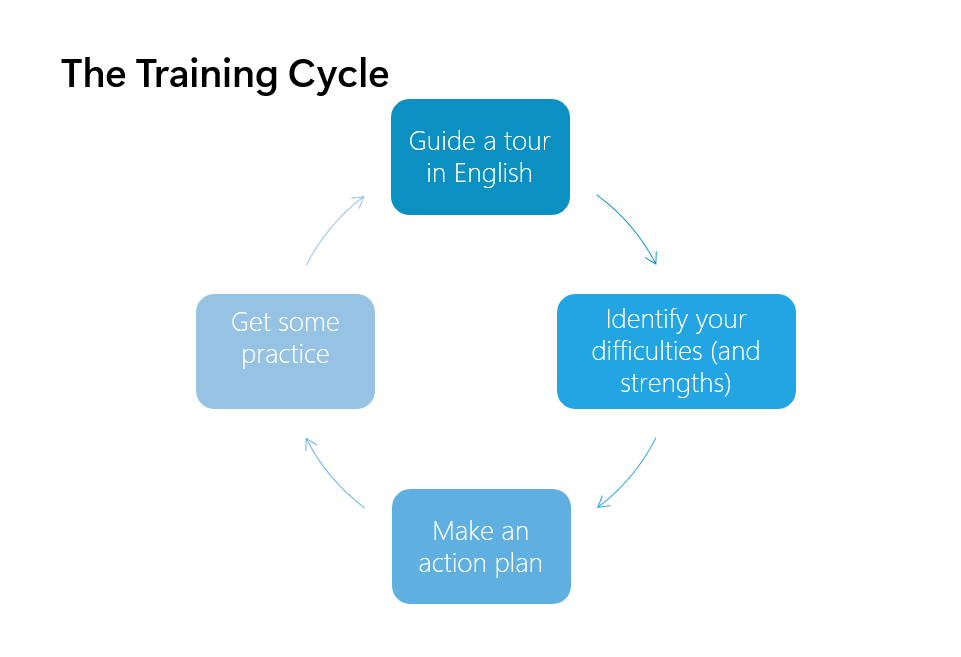
Guide a tour in English
If you want to improve the English that you use as a tour guide, you first need to understand how you use English on your tours. The best way to do this is to actually guide a tour in English and think about how it went. Start by asking your tour group for some feedback on your tour.
- What did they like best about it?
- How well were they able to follow the tour?
- Was there anything that they didn’t understand very well?
- Was there anything that they would like to know more about?
Now, spend some time thinking about your tour. Consider the following questions:
- What happened on your tour?
- How do you feel about how the tour went?
- What do you think went well?
- What could have gone better?
- How did your English affect the way you gave the tour?
- What did you find easier to do in English?
- What did you find more difficult to do in English?
I find it helps to make some notes as you think about these questions.
Identify your difficulties (and your strengths)
Now that you’ve spent some time thinking about it, write down a list of difficulties that you have using English on your tour. The important thing here is to focus on what you find difficult to DO in English instead of what you know or don’t know in English. For example, if you think that your history of art vocabulary is not very good, that might make it difficult to explain the historical background behind works of art or to answer questions about art.
Take a look at your list. How do these difficulties affect the quality of your tours? For example,
- are your tour groups able to understand and follow your tours?
- do they find your tours interesting
- do you they enjoy the tours?
- do they learn something?
You may find that some of your difficulties with English have very little impact on your tour, whereas others have a larger effect. Which of them do you think are most important for you improve on? Choose one from your list that you would like to work on improving first.
What are you better at doing in English?
Thinking about our weaknesses can be a bit depressing, so don’t forget that you can do some things in English better than others. Think about this for a minute. What do you do well in English when you are guiding a tour? Maybe you find it easier to introduce your tour in English, or describe items on your tour before you go into more detail. Well, if you can do that well in English, then there is no reason why you can’t learn to do other things well in English too.
Make an action plan

Once you’ve identified the aspect of your English that you would like to improve, it’s time to think about how to do that. An English teacher can help you with this, but there is a lot that you can do by yourself. Here are two things that you can do in your own time.
Brainstorm it
To begin with, take advantage of the fact that you have the luxury of time to think about it. When you are giving a tour you have to express your ideas in the moment, but now that you have some time to yourself, stop and think of some better ways to express the ideas that you found difficult to say in English during your tour. If you are not sure how to say it, try asking a colleague or friend, or using an online dictionary like Collins or a language checker and rephraser like Reverso.
See how other people do it
One of the best ways to learn is to watch other people doing the same thing. Fortunately, there are usually a lot of opportunities to watch other people giving a similar tour to yours in English. You may be able to join an English-speaking tour in your area. Alternatively, there are a lot of videos of tours available on YouTube. Both options have their advantages. Watching a tour in person allows you to see how tour guides interact with tourists. Live tours are also more likely to be of the same place that you guide tours around. On the other hand, videos allow you to see the transcript of the tour and pause to make notes if you like.
The important thing in either case is to focus on the aspect of giving tours in English that you want to improve on. If you want to improve your ability to explain what the artist is trying to show then listen to how other tour guides discuss this aspect of art. Take notes on any useful language that you hear either while you listen or immediately afterwards.
Get some practice
Great! So, you’ve learnt ways to express yourself that will help you on your next tour in English. To help you remember what you’ve learnt it’s a good idea to practice using it. This will enable you to feel more confident and be more fluent when you use it on your tour. So, what can we do to practise?
Try doing a practice run of your tour or part of your tour by yourself or with a friend. It would be best to walk around the site of the tour, but if this isn’t convenient you could also do it using Google Earth, which is very detailed. Feel free to practise the aspect of your English that you are focusing on more than once.
If you show a friend around, ask him or her for some feedback on your tour.
Try it again
Yes, we’ve come back to the start of the training cycle again. It’s time to try out your new English on a real tour. Enjoy your tour, and don’t worry about trying some new English. We are aiming to make progress, not to be perfect!
After your tour, think about how it went compared to the previous one. If you feel happy with the progress that you’ve made, that’s great! Now move on and consider what other aspects of your English you need to work on. If you don’t feel like you’ve made enough progress yet, that’s absolutely fine. Have a think about what you found useful from your first training cycle, and what you should do differently. Make a new action plan and then start practising before your next English tour.
Get in touch
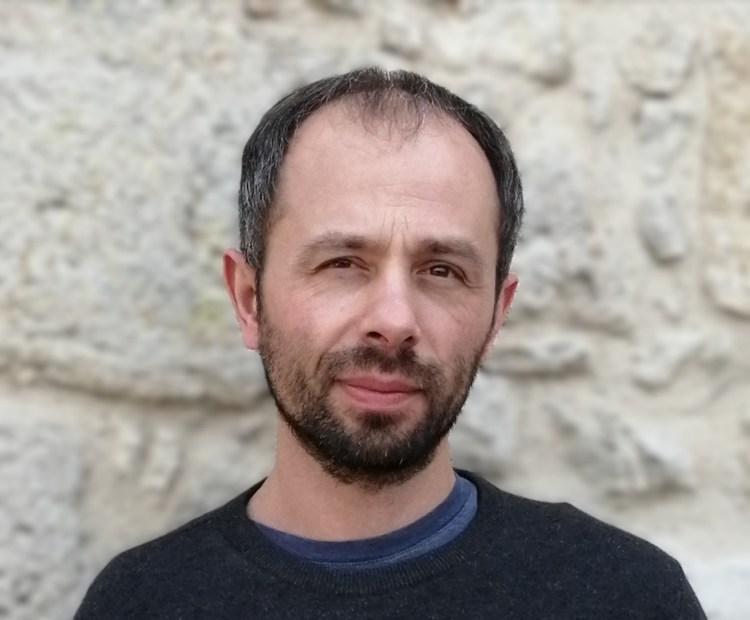
If you would like more ideas on how to improve your English in your own time, then book a time to have a chat with me about it. It would be great to speak to you.
And if you found this blog useful, then why not subscribe to learn more English that you can use as a tour guide.
What can I do to help you?

If you’d like to make your English tour more engaging, then let me tell you about Guide better tours in English, an English course especially for busy tour guides.
How I can help you to guide your tour in English
Many tour guides that I’ve met find it difficult to get their tour groups engaged and interested on their guided tours in English. As a teacher, I understand the importance of knowing that your group have had an interesting experience and have learnt something new.
Guide better tours in English is an English course that helps you to give interesting tours in English that your tour groups feel involved in.
Busy?
I know you’re busy, so Guide better tours in English fits into your working week by combining supported learning in your own time with 1-to-1 sessions with me to prepare your English tours and learn from them afterwards.
Where can I find out more?
You can find out more on my website or book a time to have a chat with me. It would be great to speak with you.
Start learning for free!
The best way to know if a course is right for you is to try it, so here is a free lesson from Guide better tours in English so that you can see for yourself.
 Nick Swerdlow