
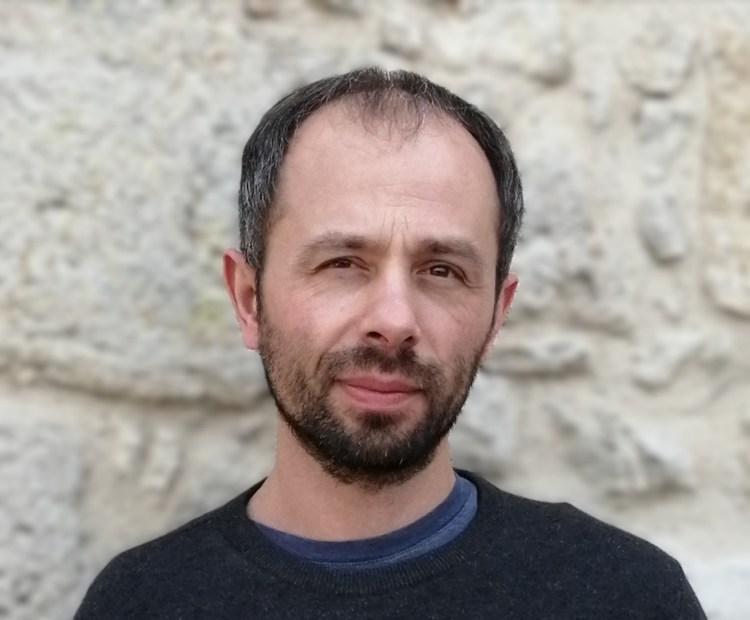
Hi, my name’s Nick. I’m an English teacher, so I’ve learnt something about standing up in front of a group of people and introducing yourself.
How you introduce yourself at the start of your walking tour is important because it’s your chance to make the group feel comfortable around you, and excited about the tour. How do you normally introduce yourself to your tour group? What sort of information do you usually include?
At the end of a good introduction the people in your tour group should
- know your name and have a positive impression of you as a tour guide
- feel comfortable to approach you and ask you a question
- have a general idea of what the tour will be of
- understand something about the context of what they are going to see
- know basic information about the tour like how long it is and how many landmarks they will see
- be excited about the tour and interested to learn more about the content of the tour
So, in the first of two articles on introductions we’re going to look at the English that we need to introduce ourselves on a walking tour.
Greeting everyone and introducing yourself
The most important thing at this point is to get people’s attention before you start speaking. How do you usually do this? You might like to stand where everyone can see you and put your hand up until the whole group is silent, or ask people to clap twice if they can hear you. When everyone claps then you have their attention. Once you have people’s attention introduce yourself clearly, confidently and in a polite and friendly manner.
When you introduce yourself, you should also think about how formal or informal you want to be. Usually, when you speak in front of a group, it’s better not to be too formal so that they feel comfortable around you. For example, most people use contractions like ‘My name‘s (Nick)’ when they speak naturally.
| Informal | Hi… | (guys) | my name’s… I’m… | |
| Neutral | Hello… Good morning.. Good afternoon.. Good evening… | (everyone) | (Let me introduce myself) | my name is… |
| Formal | (ladies and gentlemen) | (Allow me to introduce myself) |
Try it!
Practise introducing yourself in the mirror so that you are more confident and fluent when you start speaking in front of a group.
Tell them something about yourself
Why is it important for the group to know something about you? After all, they are here for the tour, not for your life-story.
Well, ask yourself this: Why did they decide to join your tour in the first place instead of finding out about the landmarks online or in a guide book? I think it’s because you bring the tour to life through your knowledge, enthusiasm, and personality. So, at the start of your tour you need to make a connection with them to show them that they are going on an interesting, and educational tour led by a personable, enthusiastic, and knowledgeable person.
So, what type of thing should we say about ourselves? Try to link what you say about yourself to the location of the tour. You might like to say something brief about one of these topics:
| Topic | Example |
| Where you are from | I’m from…(Oxford) |
| What your connection is to the location of the tour | I grew up here. Years ago, I studied here, and I come back every year. |
| How you know about the tour location | I’ve lived in (Oxford) for most of my life so I know it like the back of my hand |
| Why you are enthusiastic about the location | I travel around a lot, but (Oxford) is one of my favourite cities. It’s absolutely full of beautiful university buildings with cultural connections to books like Alice in Wonderland and films like Harry Potter. I can’t wait to show you around! |

Useful Phrases
I know it like the back of my hand
Meaning: This is a way to say that you know a place or a route very well.
Example: I’ve led tours around this museum for years. I know these rooms like the back of my hand.
You can also say: ‘I know it inside out.‘
Be full of + noun
Meaning: there is a lot of something in one place.
Example
- Oxford is full of beautiful university buildings
- The Palatine Hill in Rome is absolutely full of ancient ruins from the Roman Empire
You can also say: there + is + noun + around every corner
Example: There’s something interesting to see around every corner.
Can’t wait + to infinitive
Meaning: This phrase is used to show that we are very excited about something that we are going to do in the future
Example: I can’t wait to
- show you around the city
- tell you about it
- see you
- meet you
You can also say: I‘m looking forward to showing you around the city.
Look forward to can be followed by
- verb+ing (seeing you)
- a noun or pronoun (the tour)
To make look forward to stronger we can use adverbs like ‘really’
Example: I’m really looking forward to the tour.
Show you around
Meaning: to go with someone to show them the interesting features of a place
Example:
I’m showing a group around the museum later.
It’s a beautiful city. Let me show you around.
How to use it:
Show + someone/some people + around + place
As you can see in the examples above, show someone around is a separable phrasal verb, which means that show and around are separated by the person or people that you show around. Around is usually followed by the place that you show someone around, but this can be implied.
Try it!
Try answering these questions to practise the useful language?
- What positive or negative things is your city full of?
- What are you looking forward to doing next weekend?
- Where is your favourite place to show people around? Why?
What do you say about yourself when you introduce yourself to tour groups? What are tour groups interested to know about you? How can you link what you say about yourself to talking about the location of the tour?
Find out a bit about them
Walking tours are most engaging when they are interactive, and telling the group something about yourself gives you a great opportunity to find out something brief about them. What types of questions could you ask? Here are a few examples:
- Where are you all from?
- Which countries are you from?
- Have you travelled a long way to get to (Madrid)?
- Is this your first time in…(Rome/Italy)?
- Who’s been here before?
(Here who’s is a short form of who has – Who has been…?. Who’s can also mean who is. For example, who’s joining the tour tomorrow?)
How to use it: You
Unlike in Latin languages, ‘you’ can be used to talk to one person or a group of people. To indicate that we are talking to a group of people, we sometimes say ‘you all’ or ‘you guys’. We don’t use ‘you guys’ in the singular. Anyone or Anybody is used to ask questions to a group of people or to make negative sentences. Here are some examples:
- It’s great to meet you all.
- Does anyone know what this place is famous for?
- I’m looking forward to showing you guys around Madrid.
Don’t forget that the question that you ask them should follow neatly on from what you say about yourself. For example:
I’m from Oxford in England. Where are you guys from?
Try it!
Prepare a question to find out something about the people on your next tour group that follows on from introducing yourself.
Let me know how you introduce yourself to tour groups. I’d love to hear from you. I hope you’ve found this blog post useful. If you have, please like it, subscribe for more blog posts like this, and if you think it would help a friend or colleague, then share it with them. I’d really appreciate it.
What else can I do to help you?

If you’d like to make your English tour more engaging, then let me tell you about Guide better tours in English, an English course especially for busy tour guides.
How I can help you
Many tour guides that I’ve met find it difficult to get their tour groups engaged and interested on their guided tours in English. As a teacher, I understand the importance of knowing that your group have had an interesting experience and have learnt something new.
Guide better tours in English is an English course that helps you to give interesting tours in English that your tour groups feel involved in.
Busy?
I know you’re busy, so Guide better tours in English fits into your working week by combining supported learning in your own time with 1-to-1 sessions with me to prepare your English tours and learn from them afterwards.
Where can I find out more?
You can find out more on my website, send me a message at nji.swerdlow@gmail.com, or book a time to have a chat with me. It would be great to speak with you.
Start learning for free!
The best way to know if a course is right for you is to try it, so here is a free lesson from Guide better tours in English so that you can see for yourself.
 Nick Swerdlow
2 thoughts on “Tour introductions 1: how to introduce yourself to your group in English”