
Making small talk

Think of the last time you had an appointment to pitch a film project. How did you start your meeting on a positive note? Making a personal connection from the beginning helps to get your meeting off on the right foot, or in a positive way. That’s why most people start meetings with some casual, polite conversation that we call small talk. Some pitching meetings build in time for this conversation, others keep it short and sweet, limiting it to a handshake and a polite introduction like ‘Hi, I’m…(name). I’m very pleased to meet you’ . It’s a good idea to make sure that you understand the expectations in your meeting before you walk into it. In either case, the important thing is to make a positive impression from the start. This isn’t always an easy thing to do in English when it’s not your first language. If you’d like to learn how to make small talk at the beginning of your next pitching meeting, then read on.

Why does small talk matter?
In spite of the name, small talk matters because it helps you to get to know each other and to trust each other. at the start of your meeting This makes a real difference because people prefer to work with someone that they like and trust. Finding a connection with each other will help you both to feel more comfortable in the meeting, and will encourage the decision maker to be more receptive to your pitch.
How do I start the conversation?
I’m sure you prepare your pitch before your meeting, but how much thought do you give to the small talk before your pitch? It’s very tempting to focus entirely on the content of the meeting when you prepare, but it’s worth spending some time thinking about how to build a rapport with the person that you’re meeting.
So, what can we do to prepare? Start by making a list of things that you know about the person that you are going to meet. Even if you already know him or her, it’s worth doing some research by asking colleagues and looking online.
You try it!
Try making some notes about the next person that you have an appointment with in a table like the one below.
| What do you know about him/her | The last time you met | Things in common |
| Work: | When: | Colleagues: |
| Interests: | Where: | Interests: |
| Home life: | What was happening in their life at the time: | |
| Travel: |
Now that you have found out about the person that you are meeting, think of personalised questions that you can ask the person that you’re meeting. These can be work-related, but shouldn’t be directly about your film project. Here are some examples of the type of questions that might help you to make a connection.
Possible conversation starters
- Last time we met you were…(looking for a house). How’s that going?
- I believe we have a mutual acquaintance. (I used to work with your production manager, Peter Smith.) He mentioned that (you guys have been busy recently. How’s work going here?)
- I hear that (you’ve been working on a period drama. How are you finding it?)
- Am I right in thinking that you’ve recently got back from the Cannes Film Festival? How was it?
- If I remember correctly, you’ve been on holiday recently. How was it?
You’ll notice that these conversation starters have two parts. The first part is a comment on what you remember or have heard about the other person. This helps to make a good impression because it shows that you have paid to attention to what the other person has told you, and that you have taken the time to find out about the person or their company. The second part is a question, which helps to make conversation. The questions above are all open questions, which invites the other person to give a fuller answer.
What are open questions and closed questions?
Open questions can be answered in a wide range of different ways. They start with question words like how, what, when, who etc.
Example: If I remember correctly, you’ve been on holiday recently. How was it?
This helps to start conversation because the answer because it encourages the other person to talk about the holiday. Yes or no is not a sufficient answer.
Closed questions have a limited range of possible answers. They often (but not always) start with auxiliary verbs or modal verbs like do, be, have, can etc.
Example: Have you been on holiday recently?
How long did you go for?
This type question can be useful for asking for specific information once a conversation has started.
You try it!
Use your notes from before to make questions to ask the person that you are planning to meet?
Look around you

These days we all have a lot of distractions, but it’s worth taking a look around you as you go into your meeting (and generally in life!). The most natural conversations, and sometimes the best ones, come from what you notice around you. So, it’s important to be aware of what you can see, hear and taste. That might include
- the decor in the office
- the weather
- the view from the office
- the coffee
- and many other things that are around you
What do you notice in these office spaces?


Here are some examples of phrases that we can use to make small talk based on what we notice. In the first example, we make an observation based on what we can see, and ask a question about it.
- I notice that…(you have a photo of Berlin. Have you been there recently?)
- I love your…
- I really like your…
- I’ve never seen a… like that before
- That’s a really interesting…
You try it!
Imagine that you have a meeting in one of the offices in the pictures. Use the phrases above to comment on the your surroundings, and ask a question about it.
Don’t forget, the main aim is to make a connection with the decision maker as a person so that he or she is receptive to your pitch.
Would you like to know more?

If you found this blog post useful, then keep an eye out for my next post on how to show that you are interested in what the decision maker says at the start of a pitching meeting.
Do you need to pitch your film project in English?
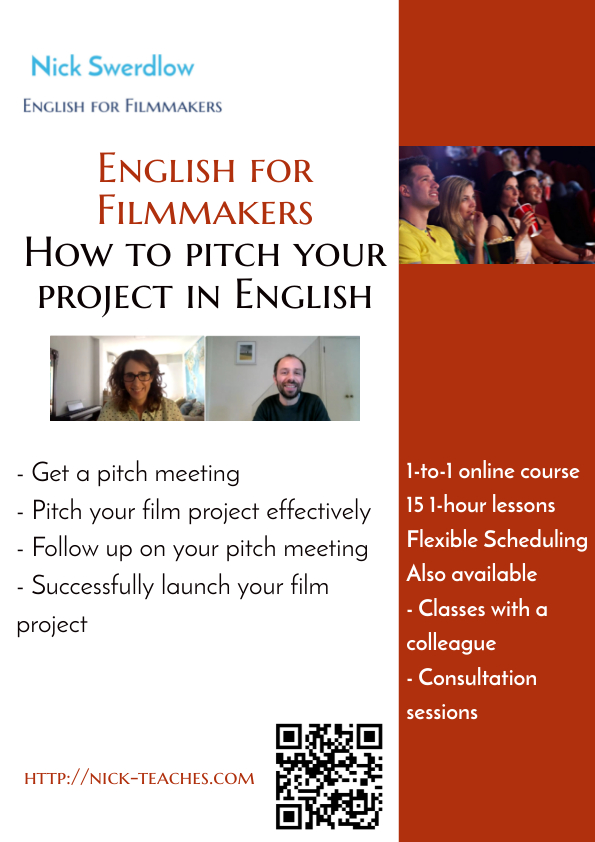
Are you a filmmaker who would like international support to fund, distribute or collaborate on your film projects? Pitch Your Project is a specialised one-to-one English course that helps you to get your film project off to the best start by pitching your film projects more effectively and confidently in English.
If you’d like to know more about the Pitch Your Project English course, then send me a message or click on the link below.
I hope you’ve found this post useful. I’d love to hear what conversation starters you thought of and how you get on the next time you make small talk in English.
A little about Nick
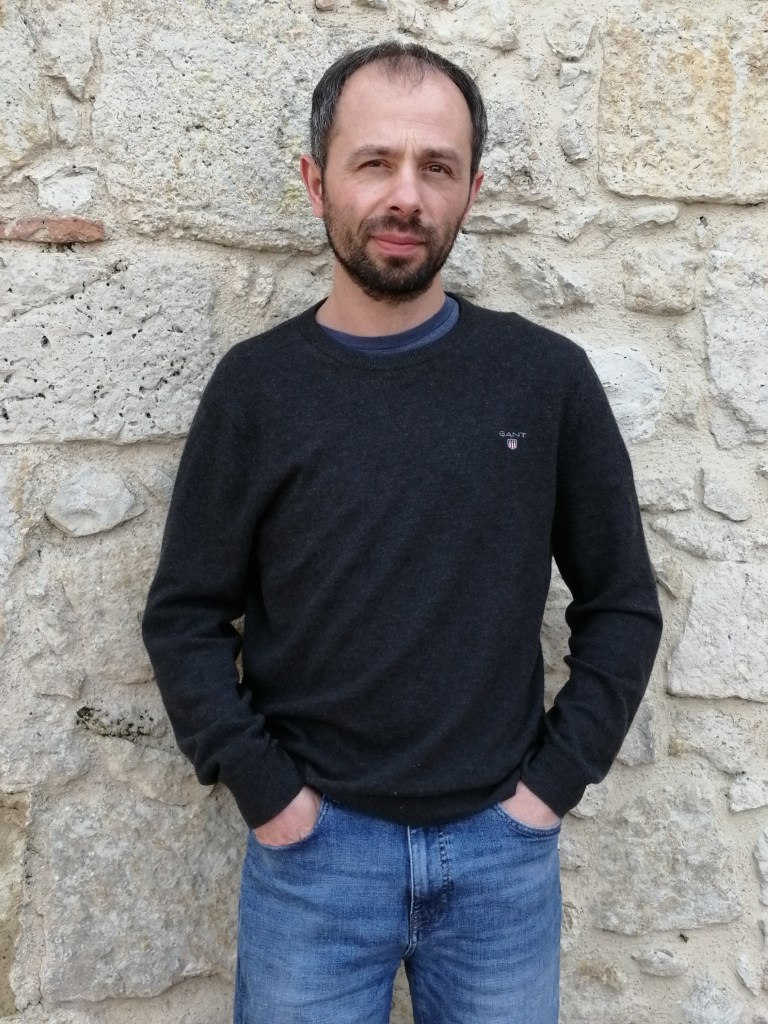
As a highly-qualified and experienced English teacher I work with learners to enable them to express their ideas effectively in English when it matters, so that they can make the right impression in meetings and conversations.
I’ve always been a film fan, and teaching film producers and directors has been a fascinating insight into the film industry, which has given me an understanding of the language skills that you need to perfect your film pitch in English.
Working as an independent teacher with my own teaching enterprise has taught me the importance of understanding learners’ needs and aims, and ensuring that my messaging talks to those aims. In the same way, your messaging in your meeting needs to talk to the aims of the person in front of you. Together, we can perfect your message so that you can be effective and confident in your English pitching-meeting.
 Nick Swerdlow
One thought on “How to make a good impression in English at the start of your pitching meeting”